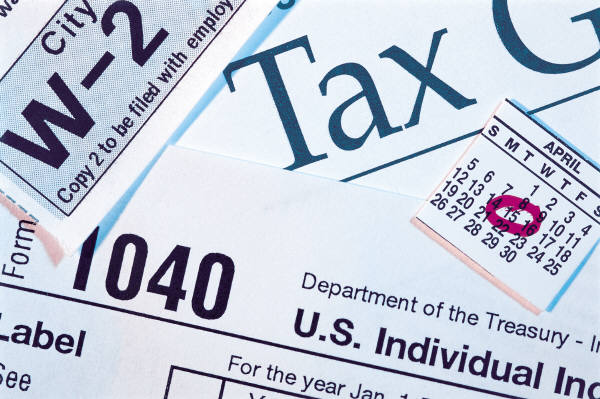
If you're over 70 1/2 years, don't forget about the Required Minimum Distribution from your retirement account by December 31st. | |
|
Beware of Tax Scams! The IRS has issued a new warning against thieves who may contact people on the phone or via email or a letter and try to trick them into divulging personal financial information, such as their Social Security or bank account numbers, or even turning over some of their hard-earned cash. And the scams can be tough to spot. Potential victims may see a fake caller ID that identifies the call as coming from the IRS or receive mail or email that appears to have the IRS letterhead. The scammers typically try to intimidate victims into acting quickly-by, say, sending a payment to what they claim is an IRS address-by threatening arrest or some other consequence. |
|
Will you be audited? Probably not. Because of reduced budget, audit counts are declining. The overall average during fiscal year 2015 was 0.84%. Beware that as your income increases so does your chance of audit. | |
|

Did you move or change your email address in 2015? Call or email the office and let us know! |
|
|
Greetings!
Here we are, almost at the end of 2015, and some things never change. Like previous years, we are still waiting to see if Congress renews a set of expired provisions, known as extenders, which allow you to claim deductions for such things as sales tax and educator expenses. We shall see.
This being mid-December, there are still some tax planning items you can consider (RMDs and Charitable Contributions come to mind). If you have any questions, please contact our office. However, most of you are probably just focused on preparing for and enjoying the upcoming holidays. We wish all of you a Merry Christmas and Happy and Prosperous New Year! |
Gift Giving Ideas & Strategies | In 2016, the annual gift tax exclusion remains the same at $14,000. This is the total annual amount that one person (i.e., donor) can give another person (i.e., donee) without gift tax consequences. If married, the spouse can also give $14,000 to the same donee.
Sometimes larger amounts can be given. Certain transfers, called Qualified Transfers, are not subject to transfer or gift tax, and can be of any size. A qualified transfer is a payment made directly to a qualified educational institution for payment of another person's tuition (not books, room and board, etc.), or a payment made directly to a medical care provider for qualifying medical expenses of another person. Qualified transfers don't count against the $14,000 gift tax exclusion.
Another case where a larger amount can be given is being able to "superfund" a 529 plan. In this case, five years' worth of the exclusion amount or $70,000 (or less) can be contributed to a 529 plan at one time. The contribution is spread equally over the current year plus the next 4 years. The spread amount plus other gifts to the beneficiary for the year still need to be at the $14,000 level or below to avoid gift tax consequences.
While the above strategies avoid gift tax consequences, don't ignore potential income tax consequences to the donee if you give something other than cash. The donor's cost basis and holding period follows the gift to the donee. This pertains primarily to assets that have appreciated in value, such as stocks or real estate. Make sure you pass along your cost basis and holding period information to the recipient for their records. |
Charitable Contributions Ideas & Strategies |
First of all, deductible charitable contributions must be given to 501(c)(3) organizations. Money or property given to a neighbor, friend or relative to help them during a difficult time is not a tax deductible charitable contribution.
Consider giving appreciated assets (stock or real estate) that you have held long term (at least one year and a day) to a qualified charity. You can claim a deduction for the fair market value of the asset. If on the other hand, you sold the asset and donated the proceeds, you would have to recognize a taxable capital gain.
Don't donate assets you have held short term (less than one year and a day). Doing so, allows you to claim a deduction for your cost basis only, regardless of any appreciated value. Also, don't donate an asset that has declined in value and is worth less than your adjusted basis (can only deduct the lower value not the higher cost). Instead, sell the asset to recognize the loss, and then donate the proceeds to the charity.
If you are over 70 ½ and you have "more than you need" in IRA assets, consider utilizing what is known as a Qualified Charitable Distribution or QCD, in which you instruct the IRA trustee to donate directly to the charity. When the law allows QCDs, the distribution counts towards the RMD (up to $100,000). This has the advantage of removing what would otherwise have been taxable income from Adjusted Gross Income or AGI, which directly affects such things as Medicare premiums. However, you don't get to claim a charitable deduction for the amount given the charity, but at least the donated amount is not counted as income. At present, QCDs are not allowed for 2015 as the law lapsed on December 31, 2014, but it may be renewed for 2015 and maybe 2016 (see note on extenders in the Greeting). Regardless of the current status of the law, doing these transfers is always a good idea, and here's why: if the provision is not renewed, you are no worse off: you recognize the distribution from the IRA as taxable income and you recognize the charitable donation on Schedule A as a deduction. If renewed, the transfer is treated as a QCD, you have lower adjusted gross income. Remember, to correctly do a QCD, you must be 70 ½ or older when the transfer is made (won't count if you are younger), and the IRA trustee must make the transfer.
Finally, protect the deductibility of your charitable contributions by adhering to the IRS documentation requirements. Please refer to the Donation Substantiation Guide on our website. |
|
As always, we are honored to handle your tax and accounting matters. Thank you for your business! Sincerely,
Doris Cloud and Paul Cloud This newsletter is for general guidance only, and does not constitute tax advice or professional consulting. Before any action, consult a professional adviser who has been provided with all pertinent facts relevant to your particular situation. Tax articles are not intended to be used, and cannot be used by any taxpayer, for the purpose of avoiding accuracy-related penalties that may be imposed on the taxpayer. The information is provided "as is," with no assurance or guarantee of completeness, accuracy, or timeliness of the information.
|
|
|